
"seven countries"
3000 article(s) found

Flavor characteristics and planting conditions of black tea in seven producing areas of Ceylon and Sri Lanka
The wooden tea boxes of international trade will indicate the output, grade, batch, producing area and company. In a simple memory, Sri Lanka is mostly the raw material source of beverage tea, while the boutique producing areas recommend five major producing areas: UVA Uba Ruhuna Luhana Kandy Kangti Dimbula Tinbura Nuwara-Eliya Nuwara Elia and two relatively rare producing areas: Uda Pussellawa

Malawi Qixi Coffee Manor introduces the flavor characteristics of Malawian coffee.
Professional coffee knowledge exchange more coffee bean information Please follow Coffee Workshop (Wechat official account cafe_style) Lawe is a small country in southern Africa and a country in the interior of the sea. Most of its coffees are grown in the northern plateau region, but the output is not large. The coffee grown in Lawe is all Arabica, and the quality has been maintained at a comparable level, compared to Ken.

7 Tips for Making Your Own Coffee
With the deepening of coffee culture, more and more people now choose to make their own coffee. First, brewing coffee by themselves is more fragrant and stronger than buying ready-made canned coffee and brewing instant coffee. Moreover, caffeine is only half the content of canned and instant coffee. It is not only fragrant and delicious, but also healthier. It is indeed the wisest choice, but brewing coffee also has certain skills and methods.

El Salvador Coffee Manor El Salvador Coffee Flavor introduction of boutique coffee in El Salvador coffee producing areas
El Salvador's coffee accounts for 40% of the country's exports, and it is usually picked in November, December and January-March of the following year. The export of raw beans lasts almost all year round. Coffee is produced in seven of the country's 14 provinces, with the largest number in the northwestern provinces of chalatenango and santa ana. The coffee produced in El Salvador is 100% Arabica, of which 68% is
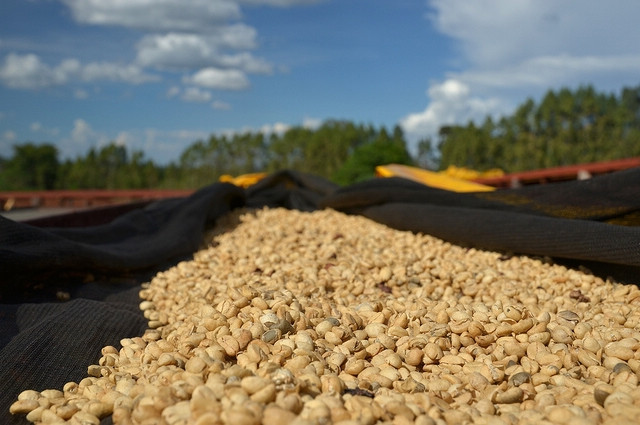
Royal Coffee processing Plant in St. Roman, a country grown in Central America, Tarazu, Costa Rica.
Costa Rican coffee cultivation was introduced by Cuba in 1779 and exported for the first time in 1820. There are about 32000 coffee farmers, with an average planting area of less than one hectare (10000 hectares) per farmer. Costa Rica has a population of 41 billion (2006), with a coffee planting area of 82500 hectares and an annual production of 1.7 million bags (60kgs per bag). The annual domestic consumption is 380000 bags.

7 Key Points of Making Coffee at Home
With the deepening of coffee culture, more and more people now choose to make their own coffee. First, brewing coffee by themselves is more fragrant and stronger than buying ready-made canned coffee and brewing instant coffee. Moreover, caffeine is only half the content of canned and instant coffee. It is not only fragrant and delicious, but also healthier. It is indeed the wisest choice, but brewing coffee also has certain skills and methods.

Introduction to Salvadoran Coffee Flavor Manor Renas Manor
El Salvador's coffee accounts for 40% of the country's exports, and it is usually picked in November, December and January-March of the following year. The export of raw beans lasts almost all year round. Coffee is produced in seven of the country's 14 provinces, with the largest number in the northwestern provinces of chalatenango and santa ana. The coffee produced in El Salvador is 100% Arabica, of which 68% is
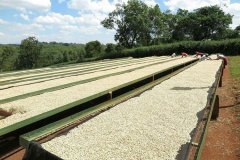
Tanzania-Luwaita Cooperative Cooperative introduces baking advice
For the exchange of professional baristas, please follow the coffee workshop (Wechat official account cafe_style) Tanzania-Luwaita Cooperative cooperative East Africa is the producer of many fine coffee, including Kenya, Ethiopia, Rwanda, etc. Tanzania is another country that produces good coffee in East Africa. Tanzania is located in East Africa and borders India with seven countries.

The spread of basic knowledge of Fine Coffee
1. Coffee was introduced into Europe in the 16th century, and coffee attracted the attention of European countries in the name of Arabic wine. In the middle of the 17th century, coffee became popular in Europe. 2. When coffee was introduced into Asia in 1600, Baba Budan, a Muslim, successfully smuggled seven seeds on his belly and planted them for trial in the mountains of Mysore in southern India without large-scale cultivation. sixteen

Nescafe Culture Nescafe Company Latest Introduction
Coffee originated in 1930. When brazil's government approached nestle, coffee guru max morgentel and his research team set out to find a way to brew coffee with water without losing its original flavor. After seven years of research in Swiss laboratories, they finally found the answer. Nespresso coffee has become a world-renowned brand. 2

Introduction to Mercedes Manor in El Salvador Coffee Flavor Manor
El Salvador's coffee accounts for 40% of the country's exports, and it is usually picked in November, December and January-March of the following year. The export of raw beans lasts almost all year round. Coffee is produced in seven of the country's 14 provinces, with the largest number in the northwestern provinces of chalatenango and santa ana. The coffee produced in El Salvador is 100% Arabica, of which 68% is

Coffee flavor and taste of Shumawa Coffee Manor in Costa Rica.
Professional coffee knowledge exchange more coffee bean information please follow the coffee workshop (Wechat official account cafe_style) Costa Rica's seven main coffee producing areas are distributed from northwest to southeast along with the inland central plateau. The fertile volcanic ash, mild and suitable temperature, and stable and abundant rainfall in Costa Rican volcanic terrain are all factors that make coffee a major agricultural product in Costa Rica.

Guatemalan Coffee Bean grading system Guatemalan Coffee characteristic Story Guatemalan treatment
Professional coffee knowledge exchange more coffee bean information please follow the coffee workshop (Wechat official account cafe_style)

Valley of western Costa Rica | Fidel Manor Valley View processing Plant | Vera sa strange red honey treatment
For more information on coffee beans, please follow the Coffee Workshop (Wechat official account cafe_style) in the western valley of Costa Rica | Fidel Manor Valley View processing Plant | what is the flavor of Vera Saqi red honey treatment? The seven main coffee producing areas in Costa Rica are distributed along the inland central plateau from northwest to southeast. The fertile volcanic ash of Costa Rican volcanic terrain,

Introduction to Mercedes Manor in El Salvador Coffee Flavor Manor
El Salvador's coffee accounts for 40% of the country's exports, and it is usually picked in November, December and January-March of the following year. The export of raw beans lasts almost all year round. Coffee is produced in seven of the country's 14 provinces, with the largest number in the northwestern provinces of chalatenango and santa ana. The coffee produced in El Salvador is 100% Arabica, of which 68% is
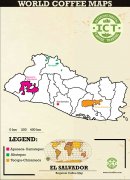
El Salvador coffee bean producing area Santa Ana, the volcanic country of El Salvador coffee cultivation.
Coffee is grown more or less throughout El Salvador (well, after all, it's not that big), but there are seven main areas where coffee is grown, all of which are considered different from each other, mainly in terms of altitude and flavor characteristics. According to PROCAF (the National Coffee Institute), it is arranged as follows: Apaneca-Ilamatepec Mountains: located in the west, from 500 elevations

Introduction to the characteristics of Salvadoran Coffee Flavor Coffee beans in El Salvador Coffee Manor
El Salvador's coffee accounts for 40% of the country's exports, and it is usually picked in November, December and January-March of the following year. The export of raw beans lasts almost all year round. Coffee is produced in seven of the country's 14 provinces, with the largest number in the northwestern provinces of chalatenango and santa ana. The coffee produced in El Salvador is 100% Arabica, of which 68% is

Balanced and soft flavor and taste characteristics of Salvadoran coffee manor introduce boutique coffee beans
El Salvador's coffee accounts for 40% of the country's exports, and it is usually picked in November, December and January-March of the following year. The export of raw beans lasts almost all year round. Coffee is produced in seven of the country's 14 provinces, with the largest number in the northwestern provinces of chalatenango and santa ana. The coffee produced in El Salvador is 100% Arabica, of which 68% is
The spread of Coffee the basic knowledge of Coffee
1. Coffee was introduced into Europe in the 16th century, and coffee attracted the attention of European countries in the name of Arabic wine. In the middle of the 17th century, coffee became popular in Europe. 2. When coffee was introduced into Asia in 1600, Baba Budan, a Muslim, successfully smuggled seven seeds on his belly and planted them for trial in the mountains of Mysore in southern India without large-scale cultivation. sixteen

Introduction of boutique Salvadoran coffee with low density and low hardness
El Salvador's coffee accounts for 40% of the country's exports, and it is usually picked in November, December and January-March of the following year. The export of raw beans lasts almost all year round. Coffee is produced in seven of the country's 14 provinces, with the largest number in the northwestern provinces of chalatenango and santa ana. The coffee produced in El Salvador is 100% Arabica, of which 68% is